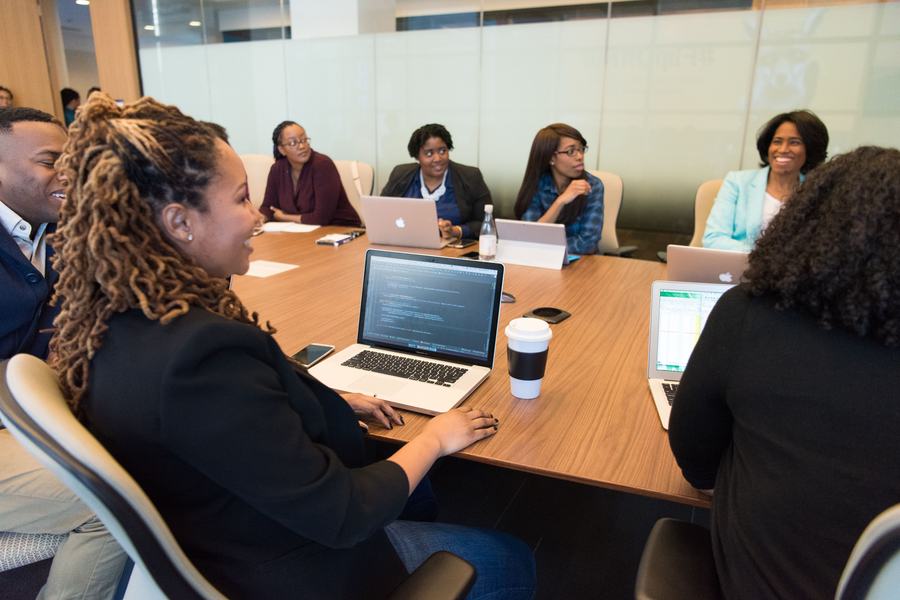
Upskilling a digital team means building the capabilities of the people you already employ—marketing, sales, customer service—through structured training and formal certification, so they can run digital marketing strategy, WhatsApp automation, and data analytics without you having to hire new staff or lean entirely on an outside agency. For a business rolling out a WhatsApp-first agentic AI ecosystem, whether your internal team can actually manage workflows, the knowledge base, and CRM integration determines whether that technology investment gets used—or just sits idle.
Why Certification Beats Ad-Hoc Internal Training
Most businesses default to informal training: a senior staffer walks a junior through the ropes, someone watches a few YouTube videos, or the team joins the occasional free webinar. It's cheap, but it leaves three gaps:
- No measurable competency standard. There's no clear point at which someone is actually "competent" at running campaigns, automation, or data work.
- No formal proof. When a client audit, an investor pitch, or an internal promotion decision comes up, there's no certificate to point to as evidence of team capability.
- Easy to abandon. Without a curriculum and a completion target, informal training quietly stops the moment a deadline gets tight.
Structured digital marketing certification and team training close all three gaps: a clear syllabus, an evaluation, and a formal credential at the end that the business—and the employee's own career—can actually use.
Two Tracks: Bootcamp (AdoloCamp) vs. Certification (AdoloCert)
Two different needs often get conflated: learning a skill from scratch versus proving a skill you already have. Adolo separates the two into distinct tracks under the Koding Studio umbrella.
AdoloCamp — the bootcamp track for building new competency
AdoloCamp fits teams that need to go from zero or near-zero: a marketing staffer who's never touched an automation tool, a support admin who needs a working understanding of AI agents, or a new hire brought on for a digital role. The format is structured—mentors, staged material, hands-on projects—not a stack of videos you watch once and move on from.
AdoloCert — the certification track for validating existing competency
AdoloCert is for teams that already have the skills but need formal validation—whether that's internal (promotions, role placement) or external (showing clients and partners your team meets a verified standard). It's also the relevant track if your business sells digital services and wants certified staff as part of the pitch.
Together, the two tracks form a complete path: bootcamp to build the capability, certification to validate it.
Upskilling vs. Hiring New: Run the Comparison First
The question that comes up most at the decision-making level: is it cheaper to upskill the team you have, or hire a new specialist? It depends on the need, but here's a framework for comparing the two:
| Factor | Upskilling Existing Staff | Hiring New | |---|---|---| | Time to productivity | Faster—employees already know the product, clients, and internal process | Slower—business-process onboarding is still needed even when technical skill is already there | | Recurring cost | Training/certification cost is usually one-time or periodic, not a new monthly salary | New monthly salary + benefits + recruiting cost (job postings, interview time) | | Turnover risk | Lower—existing employees tend to be more loyal once invested in | Higher—new hires can leave within the first 3-6 months | | Business context | Already there, no need to rebuild it | Takes time to build an understanding of product and customers | | Culture fit | Already proven | Unproven, with some mismatch risk |
A pattern that shows up often: a small-to-mid business rushes to hire a new "digital marketing specialist," only to run into a different problem—the new hire knows the tools but not the product, so it still takes a few months before they're genuinely contributing at full capacity. Meanwhile, an existing staffer who goes through a short bootcamp can apply new skills immediately to work they already understand the context for.
That's not to say hiring is always the wrong call—for large-scale needs or highly specialized expertise, a new hire still makes sense. But for leveling up the competency of a team you already have, certification-based upskilling usually delivers faster with lower risk.
What to Certify for an Agentic AI Ecosystem
As businesses lean more on WhatsApp-first agentic AI—systems that take action, not scripted rule-based chatbots—team competency needs to cover more than "good at posting on social media." A well-rounded upskilling curriculum should include:
- Digital marketing, basic to advanced: SEO, paid ads, funnels, copywriting.
- Knowledge base management: how to build and maintain a KB so agentic AI answers accurately instead of guessing.
- Automation and integration: understanding how WhatsApp automation and CRM work, and when a conversation needs human handoff.
- Basic analytics: reading conversation and conversion data to make decisions, not just produce a report.
How to Start an Upskilling Program on Your Team
A few practical steps to get moving:
- Map the competency gap for each role—marketing, sales, support—before picking training content.
- Choose the right track: bootcamp for new skills, certification to validate skills already in place.
- Set a clear completion target, not just "attend the training," so there's accountability.
- Apply it directly to real work—a certificate that sits in a drawer doesn't help; the skill needs to show up in daily operations.
Upskilling works best as an ongoing program, not a one-time event. A team whose skills are continuously refreshed stays ready for whatever the next shift in tools and digital marketing strategy looks like.
If you want your internal team to independently run digital marketing strategy and a WhatsApp-first agentic AI ecosystem, See the AdoloCamp program to check the available bootcamp and certification tracks.